Date: December 27, 2020
I have been putting off my research on Augmented Reality (AR) for a while. Over the course of the year, I have been accumulating references to interesting AR projects, but have refrained from consolidating my notes. I guess I have been saving my thoughts on the state of XR ( X Reality - or mixed reality) for the end of the year, with sufficient headspace to reflect and analyze. If I could make one definite post-pandemic prediction I would not bet on the adoption of sweatsuits as new uniforms or prolonged anthropauses (taking a step again from humanity, social interplay and all types of transport, journey and human bodily)- I would bet on AR. During 2020 pandemic, both development and adoption of AR experienced have drastically accelerated, confirming the usability that was preached about for years, as well as creating the new use cases. This week we will be taking a look at the most exciting AR projects of the past year under the influence of quarantine and social distancing.
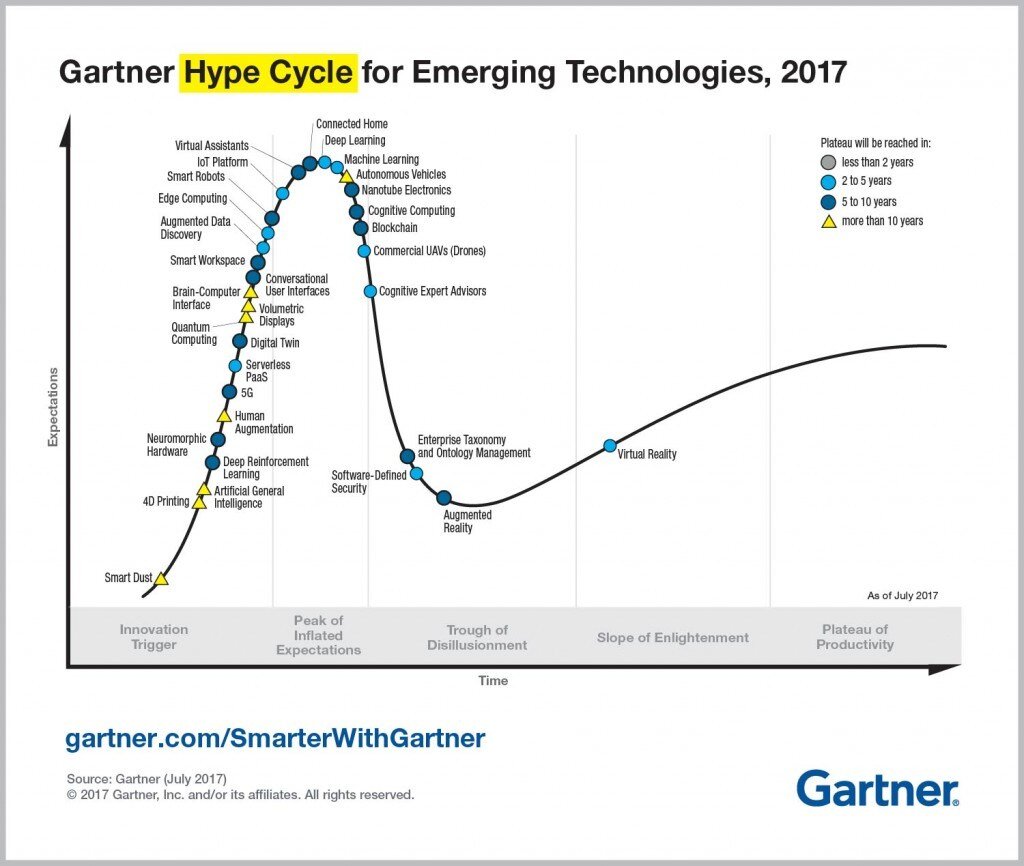
Definitions:
Augmented reality(AR) is an interactive experience of a real-world environment where the objects that reside in the real world are enhanced by computer-generated perceptual information, sometimes across multiple sensory modalities, including visual, auditory, haptic, somatosensory and olfactory
Virtual reality (VR) is a simulated experience that can be similar to or completely different from the real world.
Mixed reality (MR/ XR) is the merging of real and virtual worlds to produce new environments and visualizations, where physical and digital objects co-exist and interact in real time.
Working-from-home in AR:
-
Harry Potter’s wand feels like a malfunctioning oddity compared to a new real-life copy-paste tool. Meet my new favorite app ClipDrop (AR Copy Paste). Quickly grab visuals from the real world and paste them into digital documents feel like magic. This is probably how people felt in 1850th when they saw the first photographs of themselves. No, not magic - we (humans) build it… And this is so much better.
-
We, humans, have dreamed about teleportation ever since Fred T.Jane published the novel [To Venus in Five Seconds] where the protagonist is transported from Earth to Venus. While physically transporting ourselves to a different location might be physically impossible, holoportation is our most feasible alternative. The technology becomes extremely handy in the time of “Zoom-fatigue” and unbearable non-stop conference calls. I first saw holoportaion in 2017 as a demo by Microsoft research as a use case for Hololens. Since then, companies like PORTL can “beam” anyone from anywhere to anywhere else in real-time. But companies like Spatialis a more accessible alternative with avatars in the workplace and collaborative pieces in the living room.
-
I always thought that Microsoft’s bet with Hololens was a very visionary: they were never in the market to compete on the hardware - they were trying to shape the ‘virtual office’. For many modern workers, Microsoft Office is the beating heart of business productivity. Where would today’s workplace be without ever-faithful staples like Word, Excel, and PowerPoint? In my opinion, Hololens was never a play to create an AR device - it was always a bet to create new staples and bring Word and Excel into the new age. Virtual office set-up has been dreamed up for years, like trade desks at home, but unfortunately, they only remained demo-es. While I have not yet seen (or just not aware) of functional AR office set-ups, with remote work becoming a standard, I am anticipating to see some solid examples that will be accessible to the majority.
-
For those for whom “only online” work is not an option(people who work in locations requiring physical presence), new techniques of capturing 3D objects, remote repair does not seem to be far-fetched. Some manufacturers seriously consider AR technology to address the labor issues created by COVID-19 and create opportunities for social-distanced work. While manufacturers like Boeing and Thysenkroop have been experimenting with AR-work and CADs for years, many more manufacturers are increasing usage of real-time 3D visualization and CAD for design and manufacturing and training cycles with overlay techniques. The example that was trending during the pandemic was remote repair of ventilators.
Experiences and Entertainment in AR
Creativity thrives under constraints. Before winter 2020 AR/ VR companies had a hard time alluring audiences with digital alternatives to exciting physical experiences whether tops of mountains or museums. This year with traveling out of question, no sales pitches were necessary. One type of institution became the poster child of AR - museums.
-
MET is one of the first museums to jump on AR bandwagon - early on they published a project to bring an Island Deity to Life with Augmented Reality. It looks like they have been improving their photogrammetry techniques since they brought many more artifacts as Instagram AR filters.
-
While virtual museum tours are not AR experience, they do offer a preview. Google’s Art and Culture intiative allowing you to explore and zoom in into artworks into the privacy of your own living room. I hope this experience can tame some people’s appetites to own the artwork in order to truly appreciate it.
-
A lot of artists started bringing their signature styles online. Olafur Eliasson turns elements from nature into augmented reality artworks, KAWS allows to float it’s characters over landmarks like Grand Central,and Acute Art platform is planning to bring many more experiences online. In fact, AR assets become much more advanced. This year Google AR started rendering prehistoric creatures and Apollo 11.
-
Beyond just assets, augmented outdoor location-specific art experiences started to take off. ArtechHouse collaborated with Vince Fraser to bring his Afrosurrealist art to life in augmented reality through mobile app. Nancy Baker Cahill awed with her geolocation specific work appeared in June 2020 in Rockaways and over the capitol in DC. Sure, we have seen something like this in the past, like Apple Art walks in Central Park](), but these works engaging with the medium in a much more intricate interplay, rather than just rendering holograms.
-
And of course we would not be human if we would not use the new technology for gaming. It is hard to outdo the notorious Pokemon Go experience that people around the world have engaged in 2016. But the next big AR thing promises to be: [New Mario Kart Live: Home Circuit Uses Augmented Reality to Race Inside Your Home.

Rendering KAWS on my balcony on lake Canadagua, December 2020.
Shopping in AR
Shopping was always the most obvious of the AR experiences.
-
IKEA AR was probably one of the first ones to do [AR shopping right, allowing you to drop Billy’s into any space. Amazon also released AR room decorator not that different from IKEA’s but that will probably facilitate faster adoption.
-
Virtual try-on experiences becoming more widespread being adopted by multiple retailers from Kohl’s to Gucci.
-
But also a potential market for pure virtual goods emerges with some examples of [Louis Vuitton Virtual Goods and zoom fashion.
I am not going to debate the hardware. While I am a huge fan and proponent of lenses, phone accessibility makes phone-friendly AR experiences trump specialized use-cases. But what truly impresses me is the proliferation of AR “in-spite of hardware”, rather than because of it. It is happening smoothly. But in my opinion, it is coming…
** Fun note: during my research, I have stumbled on this article from [BBC on how holograms will replace conference calls](), where the author states that “nearly half of the US workforce is expected to work remotely by 2020 – but does the technology exist to support the trend?”. I find it funny how off were the numbers…
Business model: “picks and shovels”.
There’s a story often shared in the startup world: during the California gold rush, it wasn’t the miners who earned the most money, but those who soldpicks and shovels. Hence, in the gold rush, sell shovels.
“So one must begin again from scratch, announced the French
philosopher Jean-Paul Sartre in 1948. Modest, immediate, and direct, drawing was the ideal medium to begin. MOMA in NYC recently assembled the exhibit on drawings of various artists who have experimented on paper. The plain white papers are filled with simple black ink, but it reduces geometries to communicate universal ideals. The most interesting thing is that doodling on paper, drawing on paper requires so little, yet so many flavors and forms exist: from the abstract to the figurative, from the organic to the hard-edged. Without a doubt, the black and white aesthetic of this exhibit magnetized me and I must share the discoveries:

-
Wyllys de Castro - I always had an obsession with abstract artists in Latin America. He is considered to be a pioneer and founding contributor of the Neo-Concrete Movement
-
Herculres Barsotti - helped Wyllis with kick-starting Ne0-Concrete movement
-
Chryssa - art pioneer in light art and luminist sculpture
-
Dick Higgins - co-founder of the Fluxus and had his own newsletter Something else
-
Vera Molnar is one of the pioneers of computer and algorithmic arts
- George Mathieiu - credited as the founder of abstraction lyrique
As the year is coming to an end and it’s the time to reflect on the past year and dream up the next one, I hope the drawing metaphor can inspire all of us for brevity to start with a blank page.
During the 1960s, Op Art —short for “Optical art”—combined the two disciplines by challenging the role of illusion in art. While earlier painters had created the illusion of depth where there was none, Op artists developed visual effects that called attention to the distortions at play. The notion that eyes are drawn to areas of contrast is foundational to visual neuroscience. Hard-edged boundaries between light and dark attract attention and become exaggerated through visual perception.
Various artists made their works move through radiating lines or make their work simultaneously hard-edged and blurry through the combination of contrasts. The longer one looks at the painting, the more these areas seem to float towards the viewer and into the three-dimensional world. Kinetic illusions seem to be misunderstood, but I think they represent a lot of potential with advances in computational art and rendering of 3D graphics.

In the other news, I have been finishing the projects that I have put on hold during the year. One of the projects finished is Accidental Reading my experiment with tracking my random online content consumption in 2020 with conclusions on an information diet.
Photogrammetry is the science and technology of obtaining reliable information about physical objects and the environment through the process of recording, measuring and interpreting photographic images and patterns of electromagnetic radiant imagery and other phenomena.